
The NSE Nifty put on 9 points at 5042. IT, metal and auto stocks exhibited strength.

Nifty settled at 5,005, down 102 points. Out of 2,814 shares traded on the BSE, 1,879 declined and 858 advanced.

India Inc has expressed disappointment over the Reserve Bank of India's decision to keep interest rates unchanged. This, according to various industry associations, would result in huge capital inflows leading to further appreciation of the rupee.

Penning a Facebook post on the second anniversary of GST rollout, Jaitley said as many as 20 states are already showing more than a 14 per cent increase in their revenues and do not require the Centre to compensate them for revenue loss arising out of GST implementation.

Experts say it will make GDP growth target of 5.7-5.8% difficult to achieve, while ministries feel late resurgence will help in sowing of rabi crops.
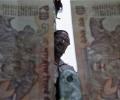
Fresh dollar selling by banks and exporters largely helped the home currency to recover from early losses

When does a default actually happen? Does making a deferred or skipping the payment for a month or so constitute a default? Will your car be repossessed then?

Sanjay Kumar Singh suggests key factors investors need to keep an eye on while choosing the direct investment route.
The fear of an economic slowdown has led to increased attention on interest rates movements all over the world.

Few proposals included in the Finance Bill would not help ease liquidity concerns in the economy, say RBI officials.

'Demonetisation may have been well-intentioned, but it was a major mistake. The government should reverse it. It could at least declare that Rs 500 notes, which many poorer people frequently use, are legal again,' Basu, who till recently was World Bank vice-president, wrote in an opinion piece in The New York Times.

'What is unusual about the current period of slow growth is that it has come without an external driver -- high oil prices and/or successive monsoon failures -- as was the case with all previous periods of slowdown, going back 50 years, notes T N Ninan.
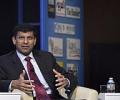
Industrial countries cannot at this point wash their hands off developing economises and say we will do what we need to, and you do the adjustment you need to, says RBI Governor.
In 2007, a year in which the inflation figure had yet to become the finance minister's Friday fear and crude oil was not hogging headlines, the placement salary spike was 10 per cent. What makes the jump this year even more impressive is that it does not take into account the offers from international companies, which typically dish out more than domestic recruiters.
'The macro-economic stresses -- high interest rates, rupee depreciation and capital flows -- have receded now.' 'Interest rates have come down, inflation is down and the rupee has bounced back.' 'If oil prices continue at this level, there will be no vulnerability.' 'Growth is a different story.'

While the UK will possibly go into recession, the bigger fear is copycat referendums from other EU nations.
The sharp downward swing in market sentiment in the past six months has rendered stock valuations attractive. Here are some stocks experts say will deliver handsome returns.
FDI in April, 2007-08 was $1.64 billion which was less than half of the figures in April this fiscal. "I want to dispel fears of any economic slowdown and investment drying up," Commerce and Industry Minister Kamal Nath told reporters in New Delhi on Thursday.

Gold has pushed lower as a result of Chinese selling.

The RBI must cut rates to spur growth, say experts.
Direct tax collection target set for a big hike, says Chidambaram.

The NDA government was initially reticent about fleshing out its economic strategy for the future. But now that it has taken enough bold initiatives on the economic front it must have the confidence to tell us more about its approach going forward, says Abheek Barua.
The last two days' recovery in commodity prices has done little to ease all-round fears of a global recession following the sharp dip in prices over the past three months. Nor are things likely to improve soon.

Many macroeconomic forecasters have built predictive models on inflation, all of which highlight intense downward pressure on prices.
Wipro, Satyam join TCS, Infosys in beating rupee blues.

The 50-share NSE Nifty settled lower by 94.05 points, or 0.87 per cent, at 10,666.55 after shuttling between 10,586.80 and 10,702.75.

The RBI chief was speaking to researchers at an analyst call.

Raghuram Rajan is correct -- the RBI's monetary response to inflation in the past has been too weak.
While there is no end to bad news on the economic front you can still tighten that proverbial belt. Here are a few ways of cutting down your expenses.

You can use gold as a financial instrument to diversify your portfolio into hedging against uncertainties in the market, but for ambitious returns, you must explore opportunities in other asset classes such as equities, debts and real estate, says Adhil Shetty, CEO, BankBazaar.com.
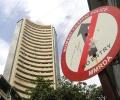
Because of local and global problems, inflation pressures may continue, helping these schemes perform better.
Last year, the government had considered raising the rate to 14 per cent but the move was shelved on account of fears of inflation, which was ruling at 6.5 per cent in January 2007. For the week ended December 29, the inflation rate stood at 3.5 per cent, raising the possibility that service tax rates will increase.

Many fear that in practice if banks make their customers pay to hold their money, it might lead to a situation where consumers hold on to cash.
'If the Singh government was characterised by policy paralysis, this one is afflicted by hyperactivism, sans a roadmap,' says Yogendra Yadav.
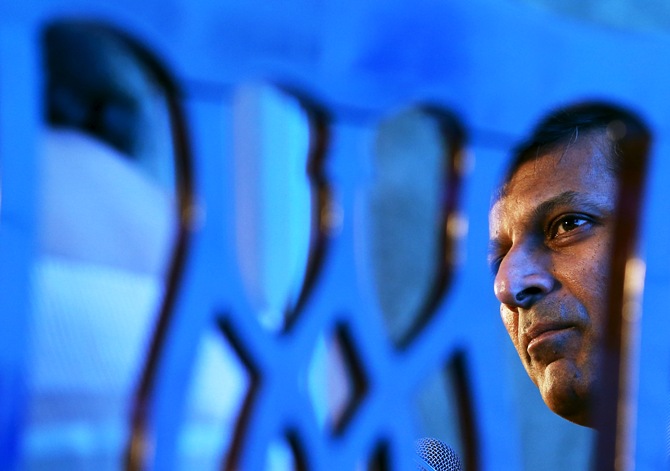
The RBI Governor brought down retail inflation to 3.8% in July.
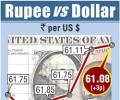
Overseas funds have also become strong buyers of debt, with net purchases of $5.6 billion so far this year.

In his first interview since becoming the chief economic advisor, Arvind Subramanian agrees the Narendra Modi government has taken some initial steps to revive private investments but says many more measures would be required to restore macroeconomic stability - reining in inflation and fiscal deficit - and bring the economy back on high-growth path. Subramanian, who has earlier worked in the research department of the International Monetary Fund, tells IMF Survey, an online magazine of IMF, that the Gujarat model is to be replicated across India but there also are macroeconomic problems at the national level that need to be addressed.

Growth in India's gross domestic product for the June quarter of 2013-14, as well as for the entire 2014-15, was 4.7%.
The finance minister should worry more about long-term problems than short-term imbalances.
 © 2026 Rediff.com - Advertise with us - Disclaimer - Privacy Policy - Sitemap - Feedback - About us - Terms of use - Grievances